
The Hardest Journey of Motherhood: The Untold Life of a Leopard Mother in Sri Lanka
Behind every young leopard that survives in the wilderness is an extraordinary mother who has spent months hunting, protecting, feeding and teaching her cubs. From pregnancy to independence, her life is a continuous struggle against the dangers of the wild.
By Nandana Williams | Nandana Williams Wildlife Photography
When we encounter a mother leopard walking gracefully through the wilderness of Yala National Park with her cubs following closely behind, we often admire the beauty of the moment without considering the extraordinary struggle behind it. The playful behaviour of the cubs, their innocent curiosity and the constant attention of their mother create some of the most memorable experiences for wildlife photographers and nature enthusiasts. However, behind these beautiful encounters lies one of the most demanding stories of motherhood in Sri Lanka’s animal kingdom. A female leopard must endure pregnancy, give birth, hunt for food, protect her helpless newborns, defend them against dangerous predators and gradually teach them the skills needed for independent survival. Unlike animals that benefit from the protection of family groups, the female leopard carries almost the entire responsibility of raising her offspring alone, making motherhood a remarkable journey of strength, patience, endurance and survival.
The Struggle Begins Long Before Birth
The Sri Lankan leopard (Panthera pardus kotiya) is naturally a solitary predator, and its reproductive behaviour reflects this independent lifestyle. Following mating, the male and female generally separate, with the male taking little or no direct responsibility for raising the offspring. For the female, however, this marks the beginning of a demanding period that continues well beyond the birth of her cubs. Pregnancy lasts approximately 90 to 106 days, during which she must continue her normal activities while supporting the development of her unborn young. Hunting, maintaining access to her territory, avoiding dangerous encounters and finding suitable resting places remain essential parts of her daily life, even as her physical condition changes throughout pregnancy.
Unlike an animal that receives assistance from other members of a social group, a pregnant leopard cannot depend upon a partner to provide food or protection. Every successful hunt becomes increasingly important because her body requires enough energy to maintain her own health while supporting the growing cubs. As the time of birth approaches, she must also identify a secure location away from possible threats and disturbances. Rocky crevices, caves, thick vegetation and protected areas among large boulders may provide suitable places for giving birth. In the varied landscape of Yala National Park, these natural shelters offer valuable concealment, but choosing a den does not guarantee safety. Long before her cubs enter the world, the mother has already begun making decisions that may determine their chances of survival.
Giving Birth Alone in the Wilderness
Deep within the forest, away from safari tracks and human activity, a female leopard gives birth without the assistance of other leopards. A typical litter contains one to three cubs, with two being common, although larger litters are possible. At birth, these cubs are extremely vulnerable, weighing approximately 500 grams to one kilogram, with closed eyes, limited mobility and no ability to protect themselves. Their survival depends entirely upon their mother’s milk, warmth, cleaning and constant attention. Their eyes generally begin opening around six to ten days after birth, but it takes considerably longer before they can move confidently or respond effectively to danger.
During this delicate period, the mother spends much of her time nursing, cleaning and protecting her newborns, yet she cannot remain beside them continuously because she must maintain her own strength. Producing milk requires energy, and the only way for a wild leopard to obtain that energy is through successful hunting. This creates a difficult situation in which the mother must balance two equally important responsibilities: remaining close enough to protect her helpless cubs while travelling far enough to locate suitable prey. The very activity that allows her to feed her young also requires her to leave them temporarily without protection, exposing the family to one of the earliest and most serious challenges of leopard motherhood.
The Difficult Responsibility of Hunting While Raising Cubs
For a female leopard raising newborn cubs, hunting becomes far more complicated than the normal struggle to obtain food. Before leaving the den, she must ensure that her cubs are carefully concealed among rocks, vegetation or other natural shelters where they are less likely to be discovered. She then moves through the surrounding wilderness in search of prey, relying on her exceptional senses, stealth and hunting experience. In Sri Lanka, leopards feed on a variety of animals, including spotted deer, sambar, wild boar, monkeys and smaller mammals, depending upon their availability and the opportunities presented by the environment. Although the leopard is an extremely capable predator, hunting success is never guaranteed, and a female may spend considerable time searching, stalking or attempting to capture prey without obtaining a meal.
While the mother continues her search, her cubs remain hidden in the den, completely dependent upon her eventual return. An unsuccessful hunt may force her to extend her search, increasing both her hunger and the period during which her young remain alone. Even after obtaining food, she must remain conscious of the potential dangers surrounding the den and avoid unnecessarily exposing its location. This difficult balance continues as the cubs grow, with their increasing nutritional requirements placing additional pressure on the mother to hunt successfully. Every meal she obtains contributes not only to her own survival but also to the future of her offspring, making her role as a hunter inseparable from her responsibility as a mother.
The Greatest Danger May Come From Another Leopard
Although young leopard cubs face threats from several predators, one of the most serious dangers may come from adult males of their own species. Male leopards are territorial animals, and unfamiliar males entering an established female’s range may sometimes kill dependent cubs that are not their own. This behaviour, known as infanticide, has been documented among leopard populations and is associated with reproductive competition. When unrelated cubs are killed, the female may return to reproductive condition sooner, potentially allowing the male to father another litter. However, this does not mean that all adult males attack cubs, as behaviour varies considerably between individuals and circumstances.
For a female caring for vulnerable young, the presence of an unfamiliar adult male can create a serious threat that requires constant awareness and careful decision-making. She may avoid particular areas, change her movements, conceal her cubs more carefully or relocate them when she detects potential danger. If an aggressive male approaches, the mother may attempt to defend her offspring despite the physical disadvantage she faces against a larger and stronger opponent. Such encounters can place her own life at risk, particularly when the cubs are too young to escape. Protecting offspring from other leopards therefore represents one of the most demanding responsibilities of motherhood, demonstrating that the challenges of raising cubs extend far beyond obtaining food and shelter.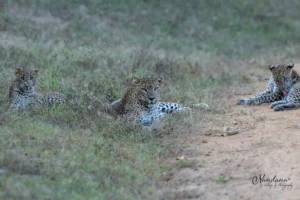
Moving Her Cubs From One Hiding Place to Another
A mother leopard does not necessarily keep her cubs in the same den throughout their early development, as changing conditions may require her to move them to a safer location. When the cubs are still too young to travel independently, she carries them individually by gently holding the loose skin around the back of their necks with her mouth. This behaviour allows her to transport the young without injuring them, although moving an entire litter can require considerable time and effort. When two or three cubs are present, she must carry one to the new location before returning to collect the others, repeating the journey until the family has been safely relocated.
To wildlife photographers, the sight of a leopard carrying her cub may appear to be an exceptionally gentle and emotional moment, especially when compared with the strength and hunting ability of this powerful predator. However, what appears beautiful to an observer is fundamentally a survival strategy. Each movement may be necessary to reduce the likelihood of discovery, respond to disturbance or provide more suitable shelter as the cubs develop. During these journeys, the mother must remain alert to her surroundings while ensuring that every cub is transported safely. The care and patience involved in relocating helpless offspring reveal another important aspect of leopard motherhood that is rarely appreciated through ordinary wildlife sightings.
The First Steps Into a World Filled With Danger
As the cubs grow older, their eyes open fully, their legs become stronger and their natural curiosity begins drawing them beyond the immediate safety of the den. The helpless newborns gradually develop into energetic young leopards that spend considerable time playing, exploring and interacting with one another. They chase their siblings, climb over rocks, bite tails, investigate moving objects and experiment with the movements that will eventually become essential for hunting. These playful activities contribute to the development of coordination, balance, physical strength and predatory skills, making them an important part of the cubs’ early education.
However, this growing curiosity creates additional challenges for the mother because young cubs have limited experience in recognising danger. They may wander away from protective cover, become distracted while following her or make sounds that reveal their presence to other animals. The female must therefore remain attentive to their movements while continuing to observe the surrounding environment for threats. An unfamiliar scent, sudden movement or unexpected sound may cause her to change direction, become alert or guide the cubs back into concealment. The same powerful predator capable of bringing down a large deer must demonstrate extraordinary patience when managing the movements of inexperienced young cubs that have not yet learned how dangerous the wilderness can be.
Feeding a Growing Family
During their earliest weeks, leopard cubs depend entirely upon their mother’s milk, but as they develop, their nutritional requirements change and they gradually begin consuming meat. Cubs may start eating meat from around two months of age, while weaning generally occurs at approximately three to four months, although the exact timing can vary. As their bodies become larger and their appetites increase, the mother must obtain sufficient food for herself and her growing family. This represents a significant increase in her responsibilities because successful hunting now supports several animals rather than one, while the cubs remain too inexperienced to provide enough food independently.
The mother may lead her cubs to a carcass once they are sufficiently mobile, allowing them to feed while she remains attentive to possible disturbances. However, carcasses may attract scavengers, other carnivores and rival leopards, creating situations in which the mother must protect her offspring while they eat. Even after obtaining a substantial meal, her responsibilities continue through cleaning, monitoring, guiding and defending the young as they become increasingly adventurous. The demands of providing food therefore extend far beyond the act of catching prey, because every successful hunt must also be managed in a way that gives the cubs an opportunity to feed safely.
Teaching Young Leopards the Skills of Survival
Although young leopards possess natural hunting instincts, becoming a successful predator requires experience, observation, patience and practice. The cubs must gradually learn how to move quietly through vegetation, identify suitable prey, approach without being detected, judge distances accurately and recognise the appropriate moment to attack. Their early attempts at stalking and pouncing often occur during play, when they chase insects, surprise their siblings or leap toward moving leaves and branches. Over time, these movements become more controlled, allowing the cubs to develop the physical abilities and confidence necessary for genuine hunting attempts.
As they mature, young leopards begin accompanying their mother during some of her activities, observing her movements and gaining experience in the surrounding environment. They gradually become more capable of identifying potential prey and may begin capturing smaller animals, although they continue depending upon their mother for food and security while their hunting abilities develop. A young leopard may appear physically strong and confident long before it possesses the practical experience required to survive independently. The mother therefore plays an essential role in guiding this transition, supporting her offspring until they become sufficiently capable of facing the challenges of the wilderness without direct assistance.
The Remarkable Leopard Mothers of Yala National Park
Yala National Park is internationally recognised for its Sri Lankan leopard population, and encounters with females raising cubs provide valuable opportunities to understand the species’ natural behaviour. While dominant male leopards often attract considerable attention because of their size, territorial activity and impressive appearance, the lives of breeding females are equally important to the future of the population. Observing an individual mother and her cubs over several months can reveal the considerable effort involved in obtaining food, maintaining safe locations and guiding young leopards through their most vulnerable stages of development.
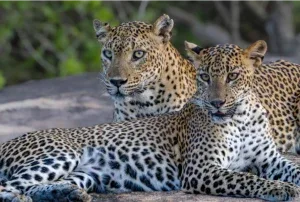
One particularly interesting example is Strawberry (YF32), a well-documented female leopard in Yala that has been observed raising several litters. Her younger cubs, Sahari (YF106) and Simmi (YF107), represent another generation within this remarkable leopard family. First documented in 2026, these two young females have attracted attention through their playful behaviour, development and appearances in areas associated with their mother. However, beyond their attractive appearance and the excitement of photographing them lies the continuing responsibility carried by Strawberry. She must locate sufficient prey, maintain suitable shelter, recognise potential threats and allow her cubs to gain the experience necessary for independent survival. Every photograph of Sahari and Simmi exploring their surroundings represents only a small part of the much larger story of their mother’s efforts, most of which take place away from the attention of visitors and cameras.
Not Every Leopard Cub Survives the Journey
Despite the extraordinary care provided by female leopards, the wilderness offers no guarantee that every cub will survive to adulthood. Young leopards are vulnerable to starvation, disease, injury, predation and attacks by other leopards, particularly during the earliest stages of their lives. Research conducted on leopard populations outside Sri Lanka has documented significant mortality among young cubs, demonstrating the difficult conditions they face before becoming independent. Although these findings cannot be directly applied as exact survival rates for Yala, they highlight the seriousness of the threats encountered by developing leopard families.
A female may invest months of effort in feeding, protecting and guiding her offspring, only to lose one or more cubs before they become capable of surviving independently. For wildlife observers who regularly follow particular leopard families, the disappearance of a familiar cub can be deeply upsetting, especially after witnessing its development over several months. Nevertheless, an absence from regular sightings should not automatically be interpreted as evidence of death, because young leopards may change their movements, become increasingly independent or move into areas where they are less frequently observed. Reliable evidence is necessary before drawing conclusions about the fate of an individual cub, although the many dangers of the wilderness make every successful journey to adulthood a remarkable achievement.
The Final Challenge: Allowing Her Cubs to Become Independent
After approximately 12 to 18 months, and sometimes longer, young leopards gradually begin the transition toward independent life. The exact age varies according to individual development, environmental conditions, food availability and other biological factors. During this period, the cubs that once depended completely upon their mother’s milk and protection have developed into capable young predators with increasing confidence and hunting experience. They begin exploring larger areas and gradually reduce their dependence upon their mother as they become capable of obtaining food and avoiding danger independently.
Young male leopards generally disperse farther from their birthplace as they search for territories of their own, while females may establish ranges closer to their mother’s territory. This gradual separation represents a natural and essential stage of leopard development, even though it marks the end of a long period of maternal care. For the mother, the demanding months of nursing, hunting, protecting and teaching eventually come to an end as her offspring begin living independently. Her greatest achievement is not keeping her cubs beside her permanently, but raising them until they possess the abilities necessary to survive without her.
The Extraordinary Strength of a Mother Leopard
In wildlife photography and public discussions, powerful male leopards frequently receive considerable admiration because of their size, dominance and territorial encounters. Their impressive appearance and confident behaviour make them popular subjects among visitors to national parks. However, the female leopard represents another form of strength that is often less visible but equally remarkable. She must continue hunting throughout pregnancy, give birth without assistance, provide milk and protection to helpless newborns, leave them concealed while searching for food and defend them against threats that may include stronger adult males. As her cubs grow, she must obtain increasing amounts of food, guide their movements and help them develop the skills required for survival.
Sri Lanka is home to many extraordinary animal mothers, including elephants that protect their calves within family herds and sloth bears that care for vulnerable young. It would not be scientifically accurate to declare one species the absolute hardest-working mother in the animal kingdom, as different animals face very different reproductive and parental challenges. Nevertheless, the solitary lifestyle of the female leopard creates an exceptional combination of responsibilities that demands physical endurance, hunting ability, vigilance and prolonged parental care. Her contribution to the survival of the next generation is fundamental to the continued existence of Sri Lanka’s leopard population, and her strength deserves recognition beyond the beautiful images captured by wildlife photographers.
A Responsibility for Wildlife Photographers and Safari Visitors
The opportunity to observe a leopard mother with her cubs is a privilege that should always be approached with patience and respect for the animals’ natural behaviour. Visitors to Yala, Wilpattu and other wildlife habitats should understand that a female caring for young cubs may already be facing significant challenges, and unnecessary human disturbance can create additional risks. Crowding a leopard, blocking her path, approaching a den, attempting to force a family into an open area or interfering with the movement of cubs can affect their normal behaviour and potentially compromise their safety. Wildlife photography should never become more important than the welfare of the animals being photographed.
The most valuable wildlife observations are often those made without disturbing the natural activities of the animals. By maintaining a respectful distance, avoiding excessive noise and allowing leopard families to move freely, photographers and safari visitors can appreciate genuine maternal behaviour while minimising their impact upon it. Understanding the responsibilities of a mother leopard should encourage greater sensitivity toward these animals, particularly during the vulnerable stages of raising young cubs. A female already carries an enormous responsibility in keeping her offspring alive, and human interference should never become another unnecessary challenge.
Behind Every Surviving Leopard Stands an Extraordinary Mother
The survival of a young leopard into adulthood is not simply the result of its natural strength or hunting instincts, but also the outcome of an extended period of maternal protection, nourishment and guidance. From the earliest days of pregnancy to the final stages of independence, the female leopard dedicates much of her life to ensuring that her offspring have the best possible chance of surviving in an environment where danger is constantly present. Her efforts are rarely witnessed in their entirety, because most of the important activities involved in raising cubs take place deep within the wilderness, far from the attention of photographers and visitors.
When we encounter a mother leopard resting beside her cubs, leading them through the forest or watching attentively as they explore their surroundings, we are witnessing only a brief moment in a much greater story. Behind that peaceful scene may be months of difficult hunting, nights spent protecting helpless newborns, dangerous encounters with other predators and countless decisions made to keep her young alive. While the powerful males of Yala may be remembered for their dominance and impressive appearances, the continued survival of the leopard population also depends upon the females that successfully raise the next generation. A mother leopard does not merely bring new life into the wilderness; she spends the following year or more struggling to give that life a future, making her journey one of the most extraordinary examples of motherhood in Sri Lanka’s natural world.
Written by Nandana Williams
Nandana Williams Wildlife Photography | Pulse of the Wild
www.nandanawildlife.com
© 2026 Nandana Williams – All Rights Reserved. Reproduction, rewriting, republishing or re-uploading this article, in full or in part, without prior written permission is prohibited. Sharing the original article through its official website link or social media sharing functions is permitted.