
Mira (YF103) – The Young Huntress of Yala National Park
From a Three-Month-Old Cub to an Independent Female Leopard in the Territory of Dominant Males
Deep within the wilderness of Yala National Park, a young female leopard named Mira (YF103) is gradually establishing her place in one of Sri Lanka’s most remarkable leopard habitats. Once a tiny cub dependent on her mother for food and protection, Mira has grown into a confident young female, developing the hunting skills, awareness and survival instincts essential for life in the wild.Her journey is particularly fascinating because she lives in an area frequently used by several well-known leopards, including Lucas (YM16), Pawan (YM81) and Pawani (YF95). Surviving in such a competitive environment requires intelligence, patience and an extraordinary ability to adapt.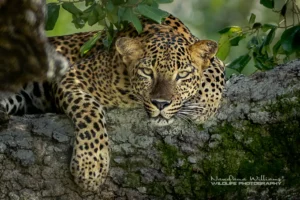
Meet Mira – YF103
- Identification Number: YF103
- Nickname: Mira (මීරා)
- Sex: Female
- First Recorded: March 2025
- Estimated Age at First Record: Approximately 3 months
- Mother: Manik (YF62 – මැණික්)
- Brother: Montee (YM88)
- Nickname Suggested By: Kaysha Perera
- Frequently Seen Areas: Paranathotupola, Suduwelimulla, Gonalabbe Plains, Yala Wewa and the surrounding lagoon habitats.
A Childhood Under the Protection of Manik
Mira was first documented in March 2025, when she was estimated to be approximately three months old. At that young age, her survival depended almost entirely on her mother, Manik (YF62), who was responsible for providing food, protecting her cubs and teaching them the essential skills needed to survive in the wild. For a leopard mother, raising cubs in Yala is never an easy task. She must hunt regularly while protecting her offspring from potential threats, including other predators and adult leopards. During the earliest stages of life, cubs remain particularly vulnerable, relying on their mother’s experience and vigilance. Alongside her brother Montee (YM88), Mira began discovering the landscape that would eventually become an important part of her life. Every movement through the forest, every encounter with prey and every lesson learned from her mother contributed to her development.
From a Playful Cub to a Skilled Young Hunter
By November 2026, Mira has grown considerably from the little cub first recorded in March 2025. Now approaching two years of age, she is becoming an active young huntress, increasingly capable of finding food and navigating the challenges of her surroundings. The transformation from a dependent cub into a capable hunter represents one of the most demanding stages in a leopard’s life. Hunting is not simply about speed or strength. It requires patience, precise observation, careful positioning and the ability to identify the right moment to strike. Mira’s growing hunting activity is an encouraging sign of her development. However, like other young leopards, she must continue improving her skills and learning how to avoid unnecessary confrontations as she moves toward full maturity.
Growing Up in the Land of Lucas, Pawan and Pawani
One of the most interesting aspects of Mira’s story is the territory she inhabits. The areas around Paranathotupola, Suduwelimulla, Gonalabbe Plains and Yala Wewa are also associated with several other leopards, including the famous Lucas (YM16), Pawan (YM81) and Pawani (YF95). Lucas is among the best-known male leopards of Yala, and his presence makes this landscape particularly interesting for those studying leopard behaviour and territorial relationships. For a young female like Mira, living in an area used by established leopards presents both opportunities and challenges. Leopard territories can overlap, especially between males and females, but encounters may still involve competition or aggression. Mira must learn when to move, where to hunt and how to avoid potentially dangerous encounters. Her ability to continue using this landscape while developing her hunting skills demonstrates the importance of adaptability in the wild. Although she is becoming more confident, the challenges of adulthood are only beginning. Establishing a stable home range and maintaining reliable access to prey will be essential for her future.
A Landscape of Forests, Plains and Lagoons
Mira’s frequently recorded locations reveal the diversity of the environment in which she is growing up. From the vegetation around Paranathotupola and Suduwelimulla to the open spaces of Gonalabbe Plains and the wetland habitats surrounding Yala Wewa, this landscape provides a mixture of cover, hunting opportunities and natural movement corridors. Such varied habitats are valuable to leopards. Dense vegetation provides concealment for stalking prey, while open areas and water sources can attract animals that form part of their natural diet. For Mira, understanding these habitats is essential. A successful leopard must become familiar with the movement of prey, suitable resting places and locations where encounters with other leopards are more likely.
Mira and Montee – Two Cubs, Two Individual Journeys
Mira and her brother Montee (YM88) began life under the care of the same mother, Manik. Although they share their early history, each must eventually develop an individual survival strategy. As leopards mature, siblings generally become more independent. Young males often disperse farther from their birthplace, while females may establish home ranges closer to their mother’s territory, depending on habitat availability and competition. Mira’s continued presence in familiar areas offers a valuable opportunity to observe how a young female establishes herself in a landscape already occupied by other leopards. Her future movements, hunting behaviour and interactions with neighbouring leopards will help reveal the next chapter of her life.
The Future of Mira – A New Generation of Yala
Every young leopard that survives the difficult transition toward adulthood represents an important part of Yala’s future. Mira’s story is not simply about growing bigger or becoming a better hunter. It is about learning to survive in a landscape where competition, changing conditions and the constant search for food shape daily life. From a three-month-old cub protected by Manik to a young female increasingly capable of hunting and caring for herself, Mira has already experienced a remarkable transformation. In the years ahead, her ability to establish and maintain a home range, avoid dangerous confrontations and eventually reproduce will determine her role in Yala’s next generation of leopards.
Mira (YF103) is no longer just the little daughter of Manik. She is becoming a young huntress with a story of her own — a story of courage, adaptation and survival in the heart of Yala National Park.
Wildlife Profile | Nandana Wildlife Photography
Photography & Wildlife Documentation: Nandana Wildlife Photography
Copyright Notice: © 2026 Nandana Wildlife Photography. All rights reserved. Reproduction, rewriting, copying or re-uploading this article or associated photographs without prior written permission is prohibited. Sharing the original article link with proper credit is permitted.