Sri Lanka’s Forgotten Mountain Leopards: Why We Must Act Now to Protect Them
Beyond the safety of national parks, Sri Lanka’s mountain leopards face a growing struggle for survival. Illegal wire snares, poaching, fragmented habitats and weaknesses in wildlife law enforcement are placing these remarkable animals at risk.
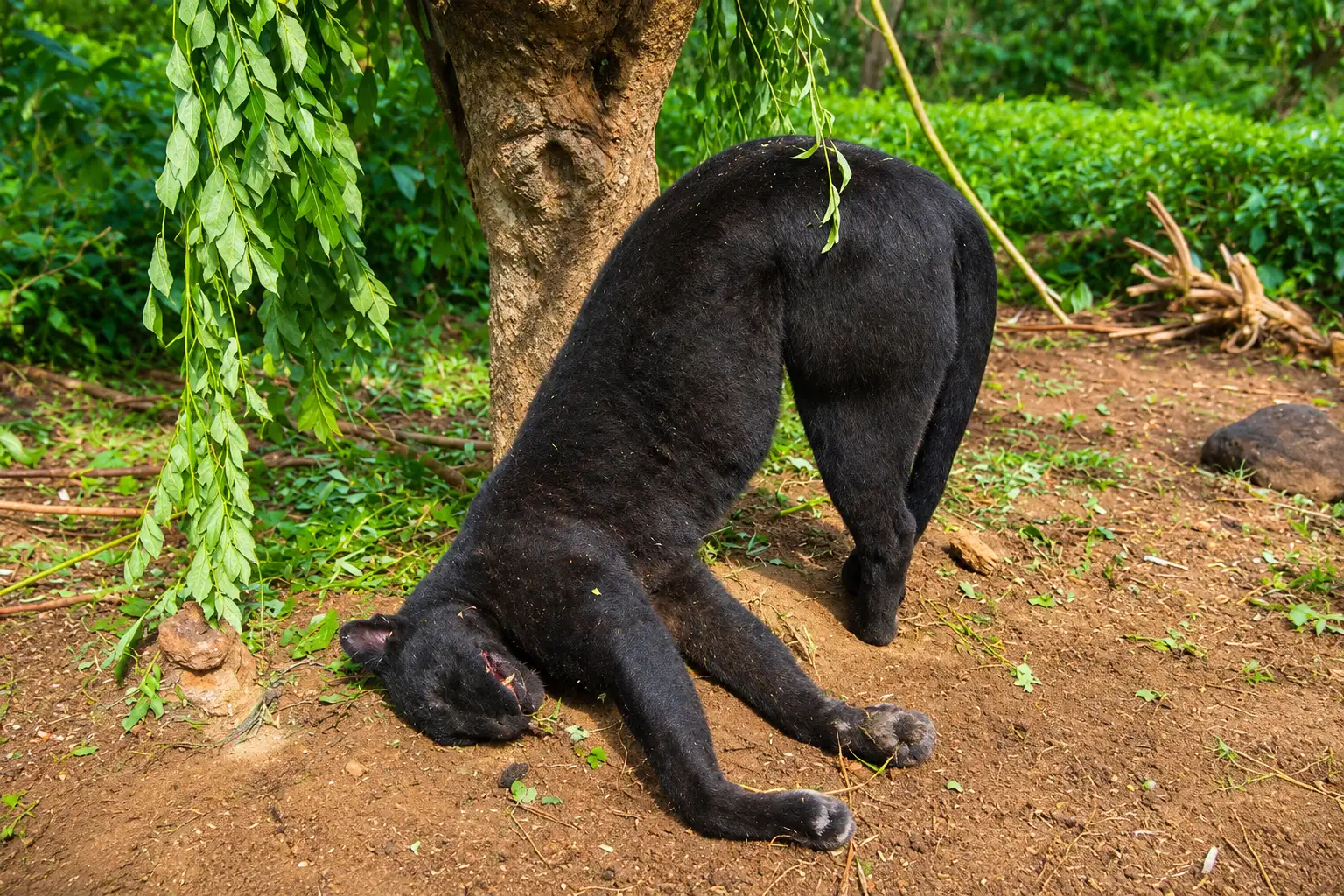
The Leopards Living Beyond Our National Parks
When people think about Sri Lankan leopards, they often imagine the famous animals of Yala and Wilpattu National Parks. These protected landscapes have brought international recognition to Sri Lanka as one of the world’s remarkable destinations for leopard photography and wildlife tourism. Yet far from the safari vehicles and the attention of visitors, another important leopard population survives in the mist-covered mountains of Sri Lanka’s Central Highlands. Among tea plantations, forest fragments, mountain valleys and isolated patches of natural vegetation, leopards continue to live remarkably close to human communities.
They move through plantation boundaries, cross cultivated land and seek shelter in the remaining forests. Their ability to survive in these environments is extraordinary, but it also exposes them to dangers that are often less visible than those facing wildlife inside national parks. These animals are commonly described as mountain leopards, although they belong to the same endemic Sri Lankan leopard subspecies, Panthera pardus kotiya, found elsewhere on the island. They are not a separate subspecies. Their importance lies in the habitats they occupy and the conservation challenges they face. The Sri Lankan leopard is classified as Vulnerable on the IUCN Red List. As the island’s largest wild cat and dominant terrestrial predator, it plays an important role in the natural food web. Protecting these animals is not simply about preserving an iconic species. It is also about maintaining the ecological health of the landscapes in which they live.
Protected by Law, but Not Always Safe in the Wild
One of the most troubling realities of leopard conservation in Sri Lanka is the difference between legal protection and safety on the ground. The Sri Lankan leopard is already a strictly protected species under the Fauna and Flora Protection Ordinance. Killing, capturing or otherwise unlawfully harming these animals can lead to legal consequences, regardless of whether an incident occurs inside or outside a national park. However, protecting an animal through legislation does not automatically protect every landscape it uses.
Many leopards in the Central Highlands inhabit privately managed tea estates, agricultural areas and forest fragments that do not have the same conservation management or enforcement presence as designated wildlife reserves. This creates a serious challenge. A leopard may be legally protected while moving through a landscape where illegal traps remain, natural habitats are becoming fragmented and wildlife authorities face difficulties monitoring large areas.
The conservation issue is therefore not simply a lack of legislation. It is the need for stronger enforcement, better protection of important habitats and greater cooperation among wildlife authorities, plantation management and local communities. A leopard should not become more vulnerable to illegal killing merely because it crosses the boundary of a national park.
Wire Snares: A Silent Threat in the Mountains
Perhaps the most immediate danger facing Sri Lanka’s mountain leopards comes from wire snares. These simple traps are often placed along animal trails, plantation boundaries and forest edges to capture wild boar or other mammals. However, snares do not distinguish between their intended targets and protected wildlife. When a leopard becomes caught, its attempts to escape can cause the wire to tighten around its body, neck or limbs. The resulting injuries may include deep wounds, restricted circulation, internal tissue damage and serious infections. Some animals die before help can arrive, while others require difficult rescue operations and lengthy veterinary treatment. Scientific evidence now provides a clearer picture of the scale of this threat. A study published in Wildlife Letters in 2026 examined human-caused leopard mortality records from 2008 to 2024 and documented 164 deaths across Sri Lanka. Of the 138 cases where the cause of death was identified, 62.3% were attributed to wire snares.
The study also found that 38.4% of recorded deaths occurred in Nuwara Eliya District. This concentration of mortality in one part of the country highlights the dangers associated with the Central Highlands’ mixture of tea plantations, settlements and remaining natural habitats. These figures represent documented cases, not every leopard that may have died during the study period. Nevertheless, they provide compelling evidence that snaring demands urgent and sustained conservation attention. Behind every recorded death is an animal that may have contributed to the survival of its population through breeding, territorial stability and the maintenance of natural predator–prey relationships. When an adult leopard is killed, the consequences may extend beyond the loss of one individual.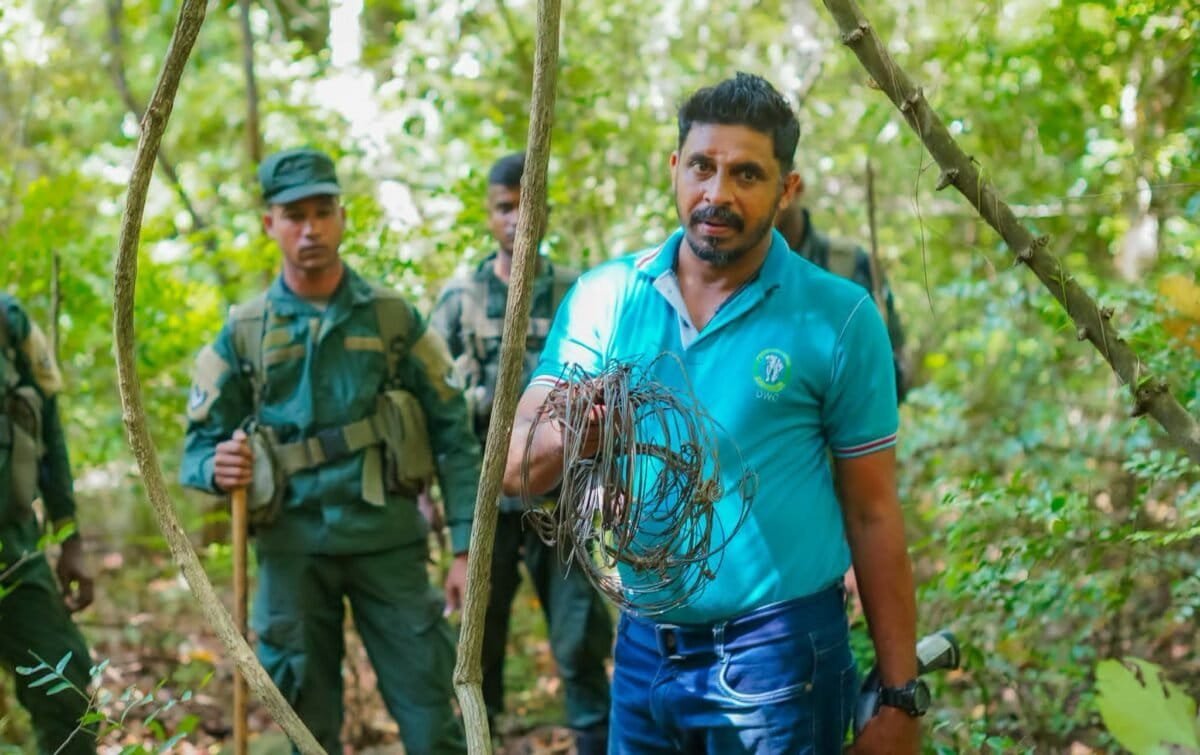
Poaching, Illegal Hunting and Weak Enforcement
Poaching and other forms of illegal wildlife killing are additional concerns for Sri Lankan leopard conservation. Some leopards may be deliberately targeted because of perceived threats to livestock or personal safety, while illegal possession and trafficking of leopard body parts create further enforcement challenges. It is important, however, to distinguish deliberate poaching from accidental capture in snares set for other animals. Not every leopard found in a wire trap was necessarily the intended target. Accurate investigations are essential to establish what happened and whether an incident involved deliberate persecution, illegal hunting or indiscriminate trapping. 
The wider problem is that illegal activities can persist in landscapes where monitoring is difficult and enforcement resources are limited. Plantation environments often cover extensive areas, and wildlife officers cannot be present at every forest boundary or animal trail. Effective protection therefore requires more than responding after a leopard has been injured or killed. Preventive action, improved reporting mechanisms, regular removal of illegal traps, proper investigation of wildlife crimes and consistent enforcement are essential.
The participation of plantation companies and communities is especially important. Workers and residents who know these landscapes can help identify dangerous areas, report suspected illegal activities and support conservation programmes. Protecting leopards should not be treated as a responsibility belonging only to wildlife officers. It requires cooperation among everyone who shares these environments.
A Landscape Where Leopards and People Already Coexist
Although the threats are serious, scientific research has also revealed something encouraging. Sri Lankan leopards have demonstrated an impressive ability to survive in landscapes heavily influenced by human activity. A study published in PLOS ONE in 2026 examined leopard behaviour in the tea estate-dominated Central Highlands. Researchers found that leopards adjusted their activity patterns, becoming less active during periods of greater human activity and using different times of day to move through shared environments.
This suggests that leopards can reduce direct encounters with humans through behavioural adaptation. Their continued presence in plantation landscapes demonstrates that coexistence is possible under certain conditions. However, coexistence should not be confused with safety. Even if leopards successfully avoid people, they may still encounter an illegally placed snare or other hazards. A landscape can provide adequate cover and prey while exposing animals to substantial human-caused mortality. This distinction is important for conservation planning. The presence of leopards in agricultural areas does not necessarily indicate that those populations are secure over the long term.
Why Habitat Protection Matters Beyond National Parks
Habitat fragmentation is another long-term concern for leopards in the Central Highlands. Over many decades, the conversion of natural forests into plantations, settlements and infrastructure has changed the structure of mountain ecosystems. Leopards are adaptable predators, but they still require access to suitable resting areas, sufficient prey and opportunities to move between territories. When remaining forests become increasingly isolated, animals may need to cross roads, agricultural land and densely inhabited areas.
These movements can increase exposure to human-related dangers. Over time, reduced connectivity may also restrict movement between breeding populations and affect their genetic diversity. Conservation efforts must therefore consider not only individual forests but also the connections between them. Natural vegetation along waterways, forest corridors, remaining woodland patches and other suitable habitats can contribute to leopard movement across the wider landscape.
Protecting these connections does not necessarily require turning every tea plantation or village into a national park. It requires scientifically informed land-use planning and cooperation that allows economic activities and wildlife conservation to coexist.
Why Protecting Mountain Leopards Matters to the World
The Sri Lankan leopard is not simply another wildlife attraction. It is an endemic subspecies found nowhere else on Earth, representing a unique part of the island’s evolutionary and ecological history. As an apex predator, the leopard influences interactions among prey species and other animals within its environment. Its conservation is closely connected to the protection of forests, natural prey populations and wider biodiversity. Sri Lanka has gained international recognition through its wildlife tourism industry, particularly the famous leopard populations of Yala National Park. Yet the future of the subspecies cannot depend solely on the animals that visitors can easily observe and photograph.
The leopards living in mountain forests and agricultural landscapes deserve equal conservation attention, even when they remain hidden from public view. Their survival also raises an important global conservation question: how can large carnivores be protected in landscapes where human communities, agriculture and wildlife must share limited space? The answer has relevance far beyond Sri Lanka. Many threatened predators across the world face similar challenges involving habitat fragmentation, human conflict and illegal killing.
Protecting Sri Lanka’s mountain leopards could provide valuable lessons in coexistence, habitat management and community-based conservation.
Why Rescue Operations Alone Are Not Enough
Whenever a leopard is discovered trapped in a wire snare, wildlife officers and veterinary teams may undertake difficult operations to save the animal. These interventions are important and deserve recognition. However, rescue should not become the primary strategy for leopard conservation. An animal that has suffered severe injuries may face complications even after receiving treatment, and successful rehabilitation does not guarantee long-term survival in the wild.
Research published in 2025 described the rescue, treatment and GPS monitoring of a Sri Lankan leopard that had been caught in a snare. Following its release into a protected landscape, the animal travelled back toward its original home range. The case demonstrates why translocation is not always a permanent solution. Leopards may retain strong connections to their established territories, and moving them does not necessarily remove the dangers they face.
Preventing animals from becoming trapped in the first place is therefore more effective than relying entirely on emergency interventions. The continuing occurrence of snaring incidents shows why prevention, landscape monitoring and community involvement must receive sustained attention.
What Sri Lanka Must Do to Protect Its Mountain Leopards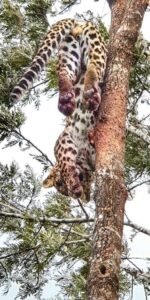
Protecting mountain leopards requires a coordinated conservation strategy that addresses immediate mortality threats alongside the long-term condition of their habitats. The first priority should be preventing illegal wire snaring, particularly within documented mortality hotspots in the Central Highlands. Regular patrols, community reporting systems, targeted investigations and the removal of illegal traps could substantially reduce unnecessary wildlife deaths.
Wildlife law enforcement also needs adequate resources, trained personnel, veterinary support and effective coordination with local authorities. Where wildlife crimes occur, investigations should be thorough and enforcement should be consistent with existing legislation.
Plantation management has an important role to play. Tea estates containing forest fragments and wildlife movement routes should be encouraged to adopt practical conservation measures, including worker awareness programmes, reporting mechanisms and protection of important natural vegetation.
Scientific monitoring must also be expanded. Camera-trap studies, GPS tracking, genetic research and systematic mortality records can help conservationists identify important leopard habitats, understand movement patterns and evaluate whether protection measures are effective.
Local communities should be treated as partners in conservation. Providing practical information about leopard behaviour, reducing conflict involving domestic animals and creating safe ways to report wildlife concerns can help build trust and support coexistence.
Wildlife tourism and photography communities can contribute by encouraging responsible behaviour, supporting credible conservation organizations and raising awareness of the threats facing leopards outside national parks. Most importantly, the protection of the Sri Lankan leopard should become a long-term national conservation commitment rather than a subject that receives attention only when another injured animal appears in the news.
A Responsibility We Cannot Ignore
Sri Lanka has already demonstrated that wildlife conservation and tourism can bring international recognition to the country. The leopards of Yala and Wilpattu have become powerful symbols of its natural beauty, attracting photographers, researchers and wildlife enthusiasts from around the world.
Yet conservation cannot be measured only by the animals that survive inside famous national parks. It must also be measured by how effectively we protect those living in less visible and more challenging environments.
The mountain leopards of Sri Lanka’s Central Highlands are part of the same irreplaceable natural heritage. They face dangers that have been documented through scientific research, and many of those dangers arise directly from preventable human activities.
The laws necessary to protect leopards already exist. What is needed now is stronger implementation, greater attention to habitats outside protected areas, improved prevention of illegal wildlife killing and sustained cooperation among government institutions, researchers, plantation communities and conservation organizations.
Every leopard deserves protection, whether it lives among the rocky outcrops of Yala, the forests of Wilpattu or the mist-covered mountains of the Central Highlands.
The future of the Sri Lankan leopard cannot be secured by national parks alone. If we are serious about protecting this remarkable animal, conservation must extend beyond park boundaries and into the landscapes where people and leopards share their lives.
Scientific References
1. Weerakkody et al. (2026). Human-Caused Leopard Deaths in Sri Lanka Are Concentrated in Central Highlands’ Estate Mosaics: Evidence From 17 Years of Mortality Records. Wildlife Letters. https://doi.org/10.1002/wll2.70040
2. Kittle and colleagues (2026). Same Place, Different Time: Leopards Employ Temporal Partitioning as a Co-existence Mechanism in a Human-Dominated, Unprotected Agricultural Landscape in Sri Lanka. PLOS ONE. https://doi.org/10.1371/journal.pone.0335296
3. Kittle et al. (2025). From Snared to Swimming: Some Observations on the Rescue, Treatment, Release and Monitoring of an Injured Sri Lankan Leopard. Ecological Solutions and Evidence. https://doi.org/10.1002/2688-8319.70029
4. Department of Wildlife Conservation, Sri Lanka. Fauna and Flora Protection Ordinance. https://www.dwc.gov.lk/
Published by Nandana Wildlife | Wildlife Conservation & Research | November 2026